
Air Coils
The Back Bay Associates Sets Benchmark for Copper Tube Aluminum Fin Air Coils for HVACR and OEM Services
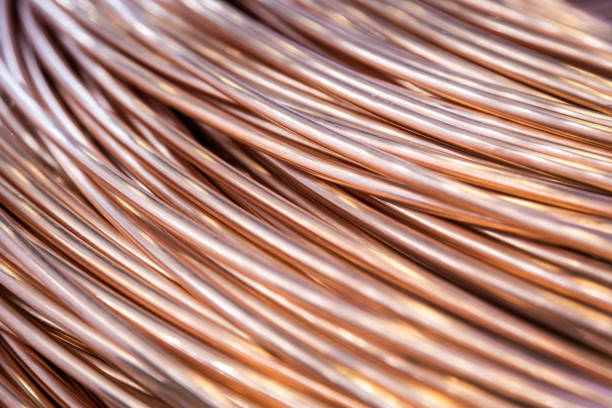
Precision engineering defines the difference between standard components and dependable system performance. In HVACR and food service equipment, air coils are central to heat exchange efficiency, system stability, and overall output quality. Every specification, from tubing material to fin configuration, influences how effectively heat is transferred and controlled.
The Back Bay Associates delivers copper tube aluminum fin air coils for HVACR and Food Service OEMs that are developed with strict attention to application demands, ensuring compatibility with OEM requirements and consistent operational results across varied environments.
We Design for Application-Specific Requirements
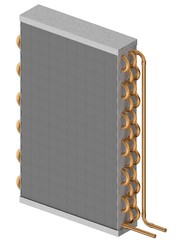
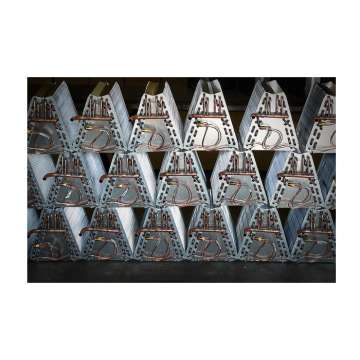
Our DX evaporator coils are engineered with flexible circuitry to meet diverse system needs. Options such as face-split and intertwined designs improve airflow management and thermal performance. These configurations help OEMs meet specific cooling requirements while maintaining system balance and reliability.
We Provide Versatility in Condenser Coil Solutions
A wide range of evaporator and condenser heat transfer air coils to HVACR OEMs and tubing material selections supports different condenser coil applications. These coils are essential in HVACR systems as they condense refrigerants and release heat during operation. Proper coil selection ensures stable system function, efficient heat rejection, and consistent performance under varying load conditions.
We Manufacture Reliable Hot Water Coils
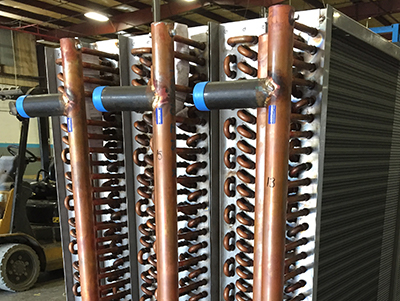
Our hot water coils are tube-fin heat exchangers with rows of tubes passing through formed fins. The bonding process via tube expansion ensures strong contact between the tubes and fins, supporting effective heat transfer air coils to HVACR OEMs in Ohio. Multiple material and configuration options allow these coils to meet specific heating requirements across applications.
We Support HVACR and Food Service OEM Demands
The Back Bay Associates focuses on delivering air coil solutions that align with OEM specifications, production needs, and replacement requirements. Whether it is evaporator coils, condenser coils, or hot water coils, each product is developed to match dimensional accuracy, material standards, and performance expectations.
Get in touch with The Back Bay Associates to discuss your copper tube-aluminum fin air-coil requirements for HVACR and food service OEM applications.
FAQs
What is the benefit of a face split coil design?
Face split design allows separate airflow sections within the coil, helping manage temperature zones and improve system efficiency in specialized applications.
Why are condenser coils important in HVACR systems?
Condenser coils remove heat from refrigerant, allowing it to change state and maintain proper cooling cycle operation within the system.
How are hot water coils constructed?
Hot water coils use rows of tubes passing through fins, with tube expansion bonding to ensure efficient heat transfer across the coil surface.
Can coils be customized for OEM specifications?
Yes. Air coils can be configured with specific dimensions, materials, and circuiting to accurately meet OEM design and performance requirements.

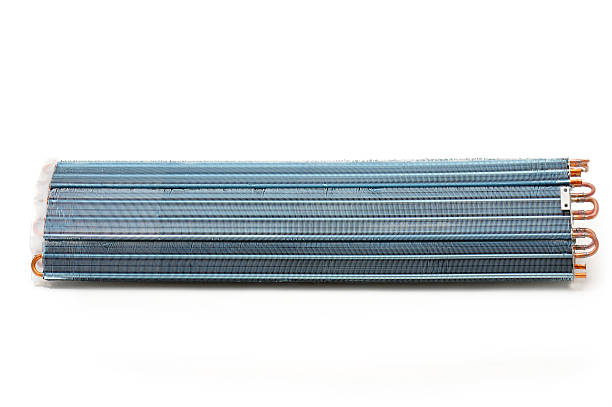
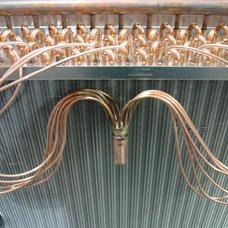
Evaporator Coils
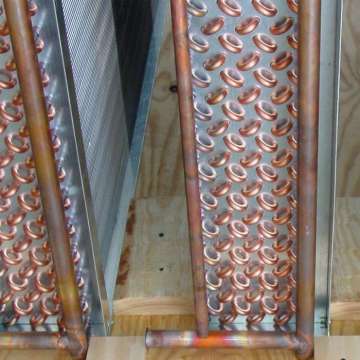
With a wide range of distributors and TXV's, we provide proper reduction of pressure and temperature to optimize coil performance. Our DX Evaporator coils offer various circuiting abilities as well as face-split and intertwined designs. We design and produce custom DX evaporator coils as well as OEM replacement evaporator coils.
We design a replacement coil that will meet all dimensional and performance criteria of the original and can ship quickly!

Condensers
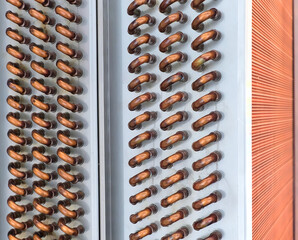
A wide range of coil patterns and tubing material selections to support a wide variety of condenser coils.
Condenser coils condense the refrigerant and, in the process reject the heat in typical two-stage HVACR systems.
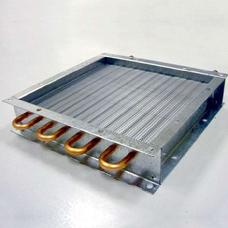
Hot Water Coils
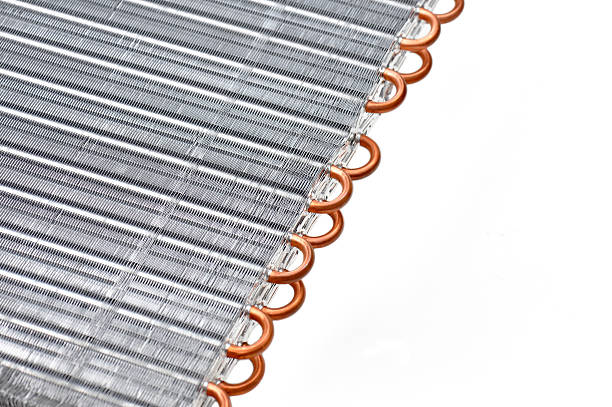
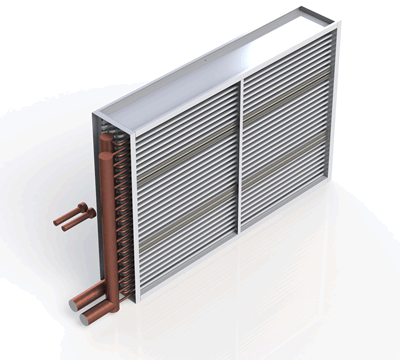
Hot water coils are tube-fin heat exchangers consisting of rows of tubes that pass through sheets of formed fins, bonded through tube expansion.
Our water coils come with various tube, fin, and material options. As the cold air passes across the coil and contacts the hot fin surface, heat transfers from the hot water flowing through the tubes to the cold air entering the coil allowing the heat transfer to occur.